
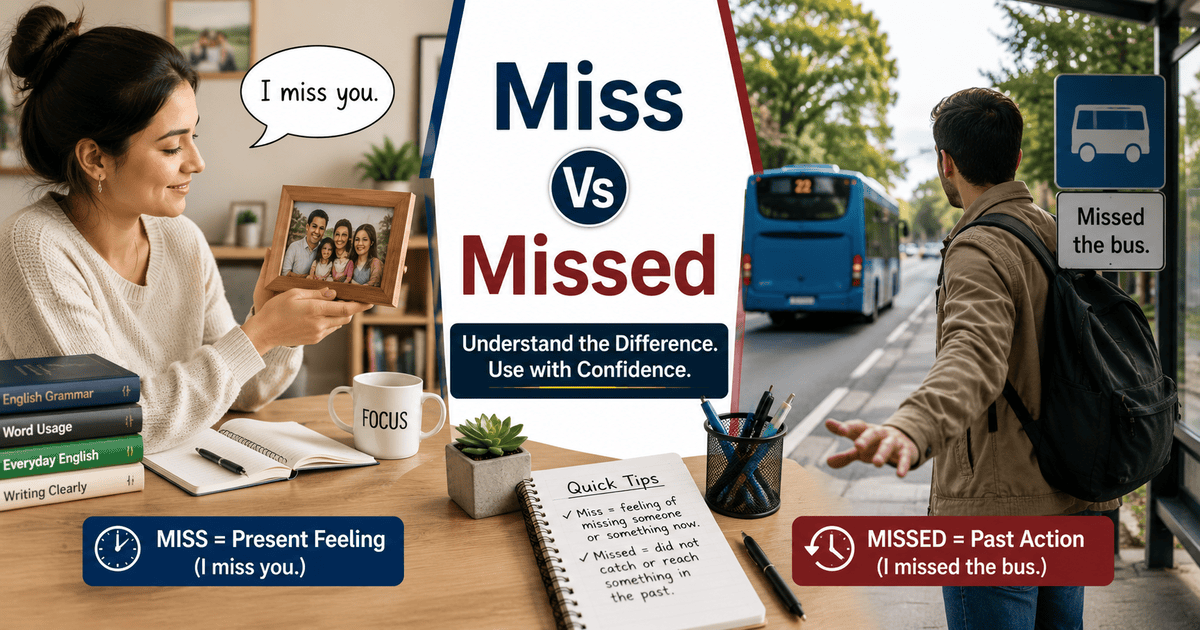
If you have searched for miss vs missed, you are probably trying to figure out which word fits your sentence. The difference is simple once you know how English verb tenses work. Miss usually talks about the present or future. Missed talks about something that already happened in the past.
This pair confuses many English learners because both words come from the same verb. You may see sentences like I miss you and I missed you and wonder if they mean the same thing. They are closely related, but they describe different points in time.
Using the wrong form can change the meaning of your sentence. Someone who says I miss you expresses a feeling they have right now. Someone who says I missed you is talking about a past event or a past feeling. That small change in tense makes a big difference.
This guide explains the difference in plain English. You will learn when to use each word, how verb tense changes the meaning, common mistakes to avoid, and simple tricks that help you choose the correct form every time.
Quick Definition
Miss is the base form of the verb. It usually describes a present feeling, a habit, or something that is generally true. It can also appear after helping verbs like will, can, or might.
Missed is the simple past form and the past participle of miss. It describes something that happened before now or works with helping verbs like have and had.
Direct Answer
Use miss when talking about the present, the future, or after a helping verb. Use missed when talking about something that happened in the past or as part of a perfect tense.
Comparison Table
| Word | Meaning | Example Sentence | When To Use It |
|---|---|---|---|
| Miss | Feel the absence of someone or fail to catch something in the present or future. | I miss my grandparents. | Present tense, future tense, or after helping verbs. |
| Missed | Felt the absence of someone or failed to catch something in the past. | I missed my grandparents while they were away. | Past tense or perfect tenses. |
Why These Words Cause Confusion
At first glance, the difference seems obvious. One word ends in ed, and the other does not. Still, many people hesitate before choosing the right form because the verb miss has several meanings.
Sometimes it means you feel the absence of a person. Other times it means you failed to catch a bus, skipped an event, overlooked something, or did not hit a target. No matter which meaning you use, the choice between miss and missed still depends on the time of the action.
Another reason people get confused is that conversations move quickly. Native speakers often shorten sentences, and English learners focus on the meaning instead of the verb tense. That makes it easy to overlook the small ending that changes the entire sentence.
Once you understand that the real difference is time, the confusion begins to disappear. Instead of memorizing dozens of examples, you can simply ask yourself one question. Is the action happening now, or did it already happen?
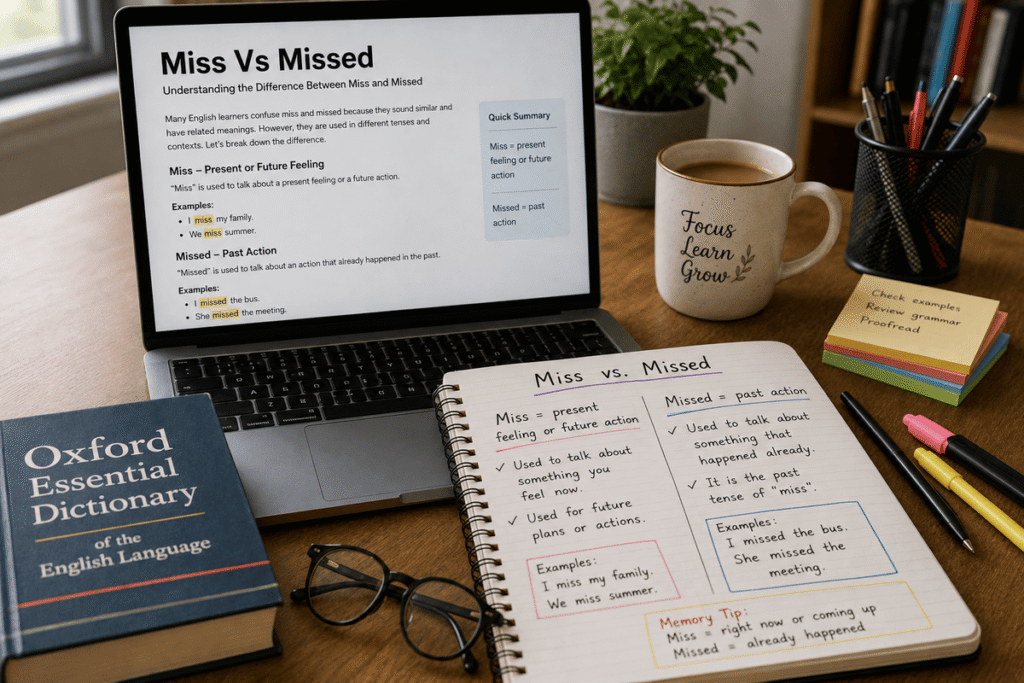
Understanding The Basic Rule
The easiest way to choose the correct word is to identify when the action takes place.
If the feeling or action is happening now, use miss.
- I miss my best friend.
- We miss our old neighborhood.
- They miss their teacher during summer break.
Each sentence describes a present feeling. The action continues right now.
If the action already happened, use missed.
- I missed the bus this morning.
- She missed yesterday’s meeting.
- We missed the beginning of the movie.
These examples describe completed actions in the past.
Thinking about time before choosing the verb is the fastest way to avoid mistakes.
When To Use Miss
Use miss for actions or feelings that exist in the present. It also appears after helping verbs because the helping verb carries the tense.
Here are a few examples.
- I miss my family every day.
- Do you miss your hometown?
- We will miss you after you move.
- She might miss the train if she leaves late.
- They can miss a class only with permission.
Notice that words like will, might, and can already show the tense. That is why the main verb stays in its base form.
When To Use Missed
Use missed for completed actions in the past. It also appears in perfect tenses with helping verbs like have, has, or had.
For example.
- I missed my appointment yesterday.
- She missed the final question on the test.
- We have missed several chances to meet.
- He has missed only one practice this season.
- They had missed the last train before the storm arrived.
Even though these sentences use different verb tenses, they all describe actions that happened before the present moment.
How The Meaning Changes
One letter can completely change the meaning of a sentence.
Compare these two examples.
- I miss you.
- I missed you.
The first sentence tells someone that you still feel their absence today. The feeling continues as you speak.
The second sentence usually means you wanted to see them, but they were not there at a specific time. For example, you arrived at a party after they had already left. It points to a completed event instead of an ongoing feeling.
The same idea appears in many everyday situations.
- We miss having dinner together because everyone lives in different cities now.
This sentence describes an ongoing feeling.
Now compare it with this example.
- We missed dinner together last Friday because everyone worked late.
This sentence refers to one specific event that happened in the past.
Understanding this difference helps you express exactly what you mean instead of leaving the listener to guess.
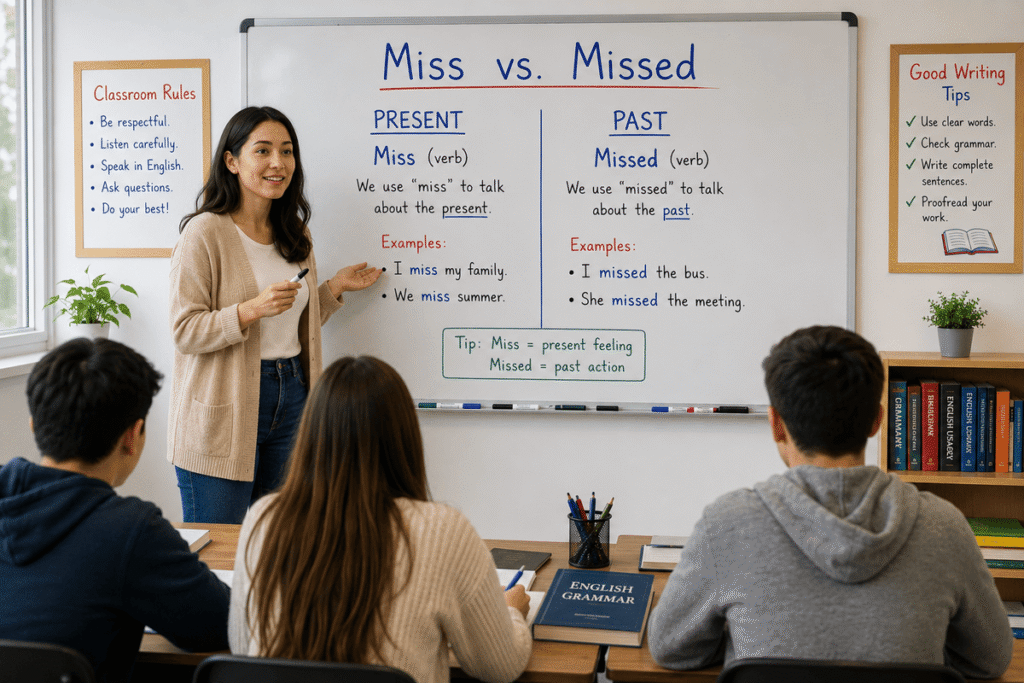
Miss As A Feeling And Miss As An Action
One reason this verb causes confusion is that miss has more than one meaning. The tense changes in the same way each time, but the meaning depends on the context.
Sometimes miss means you feel the absence of someone or something.
- I miss my childhood home.
- She misses her grandparents.
- They miss spending weekends together.
In these examples, the speaker is talking about an ongoing feeling.
The verb can also describe failing to catch, reach, notice, or hit something.
- I missed the train.
- She missed the winning shot.
- We missed the turn on the highway.
- He missed an important email.
Although the meanings are different, the grammar rule stays the same. Choose the verb based on the time of the action, not the meaning.
Common Situations Where People Use Miss And Missed
You will hear these words in many everyday conversations. Looking at real examples makes the rule easier to remember.
Talking About People
When someone is away and you still feel their absence, use the present tense.
- I miss my brother.
- We miss our neighbors.
- She misses her best friend.
If you are talking about a past situation, use the past tense.
- I missed my brother while he was traveling.
- We missed our neighbors after they moved away.
- She missed her best friend during college.
Talking About Events
People often use missed when they could not attend something.
- I missed the meeting.
- She missed the concert.
- They missed the first half of the game.
If the event has not happened yet, use the base form after a helping verb.
- I might miss the meeting tomorrow.
- She will miss the concert next week.
- They could miss the game because of the weather.
Talking About Transportation
This is one of the most common uses of missed.
- I missed the bus.
- We missed our flight.
- She missed the last train home.
If the event is still in the future, the sentence changes.
- I might miss the bus if I leave late.
- We will miss our flight if traffic gets worse.
- She could miss the train because of the delay.
Talking About Opportunities
The verb also describes opportunities that were lost.
- He missed a great chance to study abroad.
- They missed an opportunity to invest early.
- I missed the perfect moment to ask my question.
These situations always refer to something that has already happened, so the past form is the correct choice.
Common Mistakes To Avoid
Many learners make the same mistakes because they focus on the meaning instead of the tense. Once you know what to watch for, these errors become much easier to avoid.
Using Missed For A Present Feeling
❌ I missed you every day.
This sentence sounds like the feeling has already ended.
✔ I miss you every day.
The present tense shows that the feeling still exists.
Forgetting The Base Form After A Helping Verb
Another common mistake happens after words like will, can, could, should, or might.
❌ I will missed the party.
✔ I will miss the party.
The helping verb already shows the tense, so the main verb stays in its base form.
Using Miss Instead Of Missed For The Past
❌ I miss the bus yesterday.
✔ I missed the bus yesterday.
Words like yesterday, last week, and this morning usually signal that the past tense is needed.
Easy Ways To Remember The Difference
You do not need a complicated grammar rule to get this right. A few simple reminders can help.
First, look for time words. If the sentence includes yesterday, last night, last year, or another past time expression, missed is usually the correct choice.
Next, look for helping verbs. If you see will, can, could, may, might, or should, use miss instead of missed.
Finally, ask yourself one simple question.
Is the feeling or action happening now?
If the answer is yes, use miss.
Did it already happen?
If the answer is yes, use missed.
That single question solves most grammar problems with this verb.
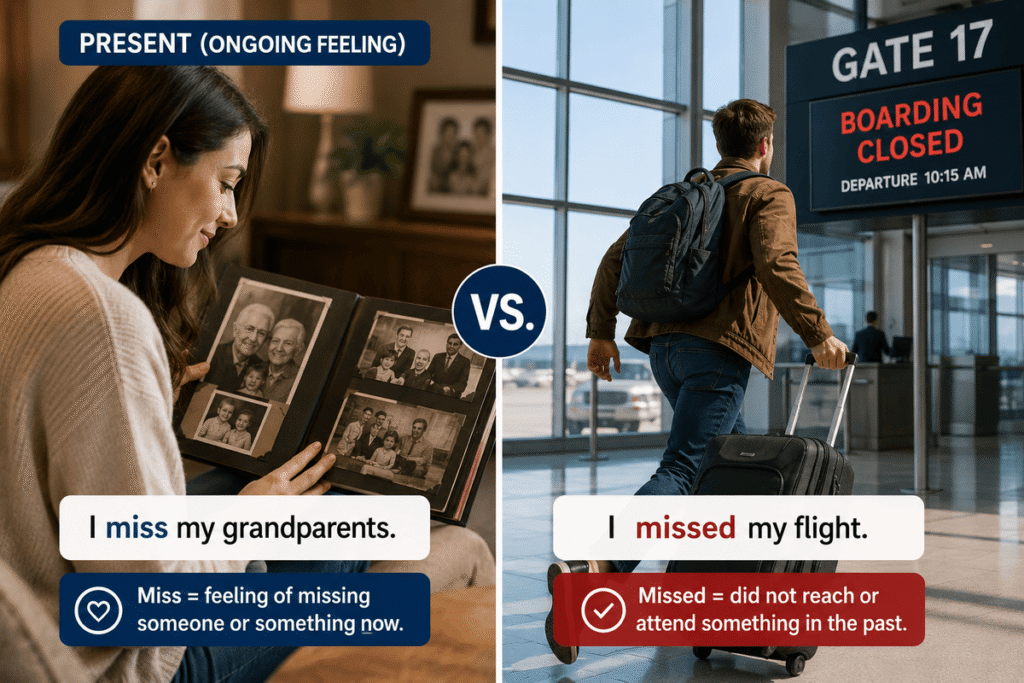
Similar Words That People Mix Up
English has several verb forms that look similar but serve different purposes. Learning them together makes the pattern much easier to understand.
Miss
This is the base form.
- I miss my family.
Misses
Use this form with singular subjects like he, she, or it in the present tense.
- She misses her hometown.
- He misses his dog.
Missed
This is the simple past form and the past participle.
- We missed the beginning of the movie.
- They have missed only one class.
Missing
This form is used with continuous tenses or as an adjective.
- I am missing my friends today.
- She is missing an important document.
Notice how each form has its own job. Once you recognize the pattern, choosing the correct verb becomes much easier.
Does It Matter In Everyday English
Yes, it does. Using the correct tense helps people understand exactly what you mean.
Imagine telling someone, I missed you. They may think you are talking about a specific moment when they were not around.
Now compare that with I miss you. The second sentence tells them that the feeling still exists today. That small change can make your message much warmer and more personal.
The same idea applies to everyday situations.
Saying I missed the meeting tells people the meeting already happened. Saying I miss the meeting suggests you regularly feel the absence of the meeting or that you are talking about a repeated experience, which is a very different meaning.
The good news is that this rule is consistent. Once you understand how verb tense works, you can apply the same thinking to many other English verbs.
FAQs
Is miss or missed correct?
The correct choice depends on the time of the action. This is the key idea behind miss vs missed. Use miss for present or future situations and missed for actions or events that already happened.
What is the difference between I miss you and I missed you?
I miss you means you still feel the person’s absence right now. I missed you usually refers to a past moment when you wanted to see the person but could not. The first describes an ongoing feeling, while the second points to a completed event or past emotion.
Can I say I will missed you?
No. That sentence is not grammatically correct. After a helping verb like will, always use the base form of the verb.
✔ I will miss you.
❌ I will missed you.
Why do people confuse miss and missed?
Both words come from the same verb, and they often appear in similar situations. The real difference is the verb tense. Once you identify when the action happens, choosing the correct form becomes much easier.
Is missed only used for the past?
Most of the time, yes. Missed is the simple past form, but it also works as the past participle in perfect tenses.
For example:
- I have missed several classes.
- She had missed the deadline before anyone noticed.
In both cases, the action happened before the present moment or before another event in the past.
What is the past tense of miss?
The past tense of miss is missed.
Examples:
- I missed the bus.
- We missed our flight.
- She missed the final question on the test.
Can miss describe a feeling?
Yes. That is one of its most common uses. When you say I miss you or We miss our old neighborhood, you are describing an ongoing feeling in the present.
Final Thoughts
The difference between miss vs missed comes down to one simple idea. Miss describes a present feeling, a future possibility, or follows a helping verb. Missed describes something that already happened or forms part of a perfect tense.
When you are unsure, pause for a moment and think about the time of the action. If it is happening now, choose miss. If it already happened, choose missed. That simple habit will help you avoid almost every mistake.
You can also remember that helping verbs like will, can, could, and might always take the base form miss. Past time expressions like yesterday, last week, and this morning usually signal that missed is the correct choice.
The next time you write a message, send an email, or speak in English, you will not have to guess. Focus on the time of the action first, and the correct verb form will usually become obvious.